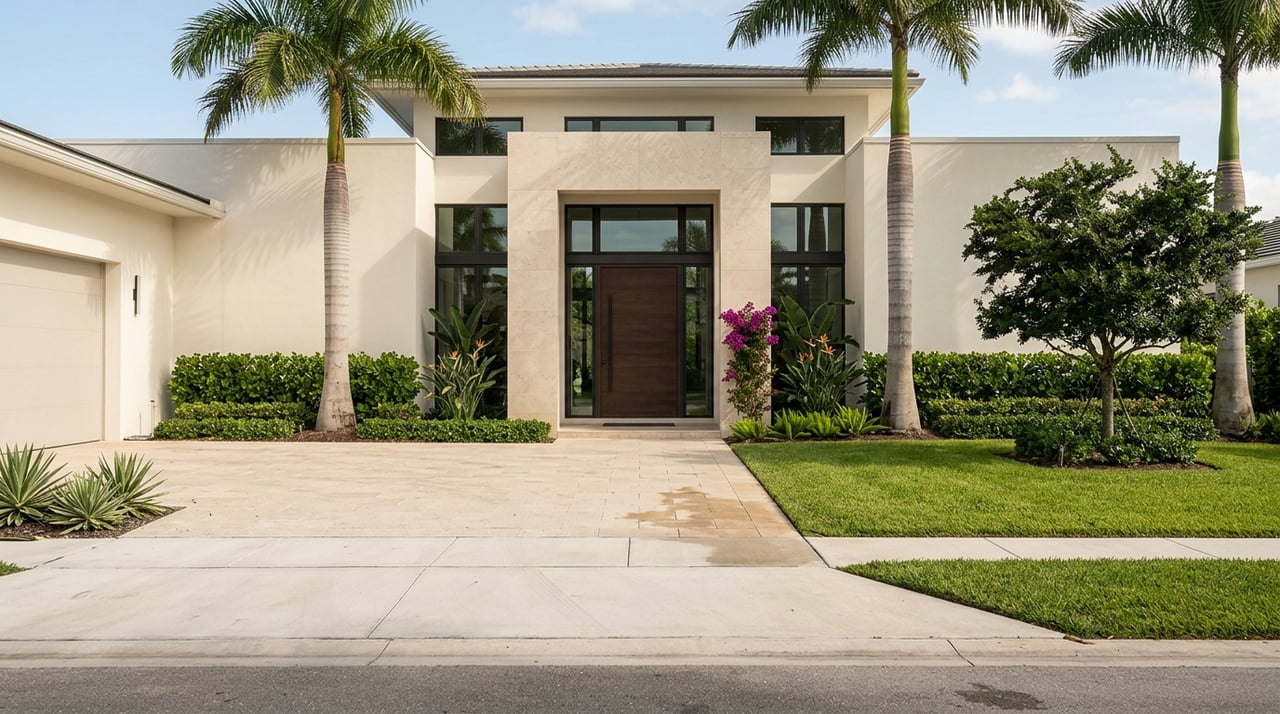
Waterfront or Inland Living in Boca Raton?
May 21, 2026
May 21, 2026
Trying to choose between a waterfront home and an inland home in Boca Raton? That decision can shape not just your budget, but also how you spend your weekends, what kind of upkeep you take on, and how you experience daily life in South Florida. If you are weighing the view, the lifestyle, and the long-term costs, this guide will help you compare both sides clearly and confidently. Let’s dive in.
If you are comparing waterfront and inland living in Boca Raton, the first thing to know is that the price gap is real. In March 2026, Boca Raton’s overall median sale price was $815,000, but local ZIP code data shows that values can climb much higher as you move closer to the coast.
Q4 2025 single-family data showed a clear east-to-west pricing pattern in Boca. The median sale price was $2.39 million in 33432, $1.73 million in 33496, and $945,000 in 33498. That does not mean every waterfront property is ultra-luxury or every inland home is lower priced, but it does show that proximity to the water often comes with a meaningful premium.
That said, inland Boca is not one single market. Neighborhood and community pricing spans a wide range, from areas like Boca del Mar at $379,900 and Boca Chase at $459,000 to Boca West at $599,000 and Broken Sound at $755,725. If you are shopping inland, you may find very different options depending on whether you want a condo, townhome, single-family home, or estate property.
For many buyers, waterfront living is about more than the view. In Boca Raton, the practical appeal often includes private docks, boat lifts, deepwater frontage, seawalls, and direct or easier access to the Intracoastal and ocean routes.
The City of Boca Raton has 77.18 miles of canals and lakes and is bordered by the Atlantic Ocean to the east. That creates a strong boating culture, even though the city itself does not have commercial marinas within city limits. Nearby marinas just north and south of the city provide services like fuel, repairs, storage, food, and dockage.
Current waterfront listings in Boca often highlight features such as no fixed bridges, reinforced seawalls, and outdoor spaces designed around the water. You may see pools, terraces, screened patios, and entertaining areas that make the backyard feel like a private resort. If your ideal day includes stepping outside and getting on your boat, that kind of access can be hard to replace.
Inland living in Boca Raton offers a different kind of value. Instead of paying for private dock access, you may be able to put more of your budget toward square footage, lot size, privacy, or community amenities.
Many inland properties emphasize features such as gated or guard-gated entry, clubhouses, fitness centers, tennis, pickleball, resort-style pools, and on-site management. Depending on the community, you may also find larger yards, guest houses, home offices, summer kitchens, three- or four-car garages, and generators.
This makes inland Boca especially appealing if your priorities are flexible living space and neighborhood infrastructure rather than direct water access. It can also be a strong fit if you want a luxury lifestyle without taking on the added marine-specific ownership issues that can come with a waterfront property.
One of the biggest questions is whether you truly need private water access. That answer can make the difference between a waterfront purchase feeling essential or simply optional.
Boca Raton’s main public boating access point is Silver Palm Park, which the city identifies as the only motorized boat ramp in Boca Raton. The ramp is open 24/7, connects to the Intracoastal Waterway, and requires an annual boat launch and trailer permit. For buyers who boat occasionally, that public access may be enough to enjoy the lifestyle without paying waterfront prices year-round.
There is another boating detail many buyers overlook: bridge access. Boca Raton has four drawbridges, and the city publishes opening schedules for them. If you are buying a waterfront home, the route from your dock to open water can matter nearly as much as the address itself.
Waterfront homes usually bring a more layered ownership experience. Along with the home itself, you may need to think about flood exposure, seawall condition, dock maintenance, boatlift inspections, and permit history.
Palm Beach County says FEMA’s updated flood maps became effective on December 20, 2024, and that thousands more residents in the eastern part of the county were added to high-risk flood zones. The county also states that all county residents live in a flood zone and that windstorm insurance does not cover flood damage. Florida’s Office of Insurance Regulation also states that standard homeowners insurance does not include flood coverage.
Florida law adds another important consumer protection step. Under Florida Statute 689.302, sellers of residential real property must provide a flood disclosure to the buyer at or before contract execution. If you are considering a waterfront purchase, that disclosure is only the starting point. You will still want to understand the property’s flood zone, insurance requirements, and any prior issues that may affect future costs.
In Boca Raton, marine improvements come with their own due diligence. The city’s rules for seawalls and marine structures require plan review materials such as surveys, property lines, seawall wetface or bulkhead lines, and marine structure locations, along with inspections for seawalls, docks, and boatlifts.
That means a waterfront home often needs a more specialized review than an inland home. If a dock, seawall, or lift is part of the property, you want to understand its condition, compliance, and permit history before you move forward. Those details can affect both safety and future expenses.
Inland homes usually shift the focus away from marine infrastructure and toward the house and community itself. In some Boca communities, that may also mean monthly HOA or club dues in exchange for amenities and managed common areas. The exact costs vary by property and community, but it is an important part of the inland ownership picture.
If boating, water views, and private dock access are non-negotiable, waterfront living may be the right choice. You are likely paying more, but you are also buying direct access to a lifestyle that inland homes usually cannot replicate.
If you want more flexibility in budget, more value per square foot, or a stronger focus on amenities and lot size, inland Boca may make more sense. In many cases, you can still enjoy the Boca lifestyle and use public launch access or nearby marinas when you want to get out on the water.
The better question is not simply waterfront versus inland. It is whether you need private water access often enough to justify the premium, the upkeep, and the extra due diligence. Once you answer that honestly, the right path usually becomes much clearer.
Whether you are relocating, buying a second home, or narrowing your search within Boca’s many micro-markets, a local strategy matters. If you want help comparing neighborhoods, communities, and lifestyle tradeoffs with a more personalized lens, schedule a complimentary consultation with Karen Lee Diaz.

Karen Lee Diaz
Karen Lee Diaz is a real estate agent with Compass, serving Boca Raton and the surrounding South Florida luxury market. With a background in social work and a doctorate, Karen approaches real estate as more than transactions—she's built her career on relationships, listening closely to clients' needs and guiding them through one of life's biggest transitions, whether they're first-time homebuyers or high-net-worth investors. Bilingual in English and Spanish, she brings a rare combination of warmth, advocacy, and deep local knowledge to every deal, measuring her success not in closings but in the lasting impact she makes in her clients' lives.
Get assistance in determining current property value, crafting a competitive offer, writing and negotiating a contract, and much more. Contact Karen today.